Instrumentation
Measuring is the first step: then we can control and improve, and that is how savings are achieved in the blasting process. We have instruments to measure the properties of the explosive and the variables of the detonation itself: velocity of detonation, detonation pressure, explosive density in the hole, explosion temperature, near-field vibrations, borehole camera inspection and hole deviation, among others that are very useful for blasting engineering.
BH CAM
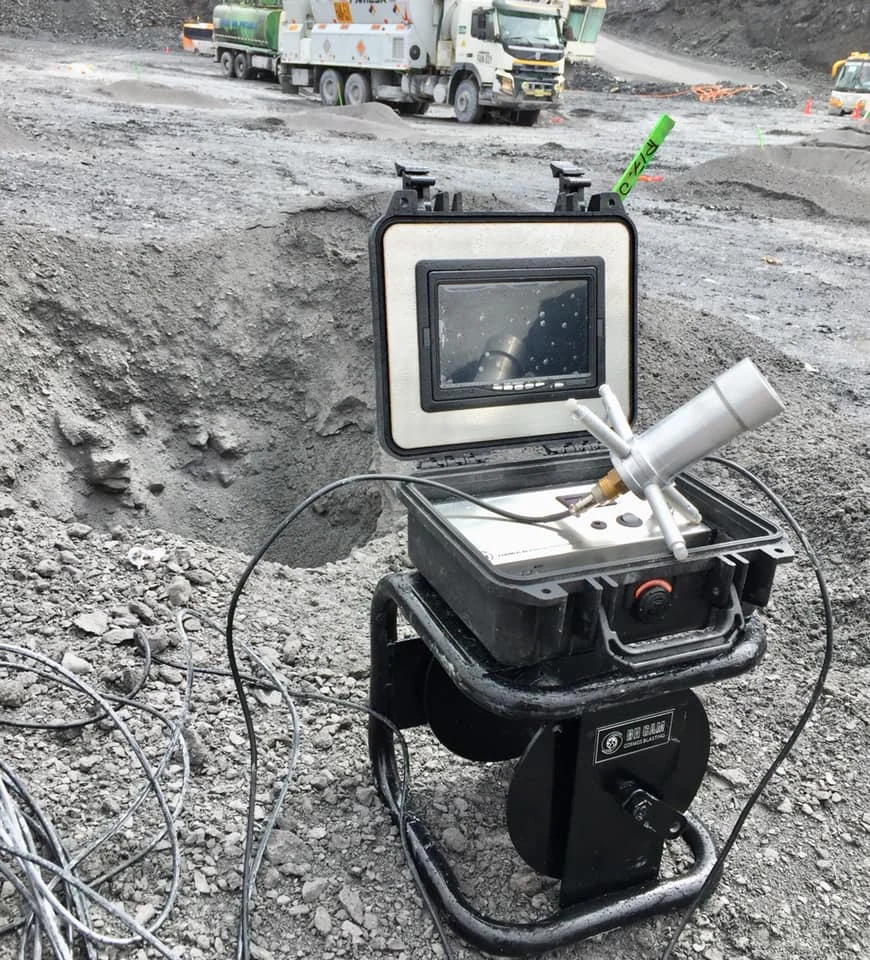
Borehole camera
An armored camera that travels down into the depths of a blasthole. It withstands water, darkness and impacts, and shows the ground conditions where the detonation will take place.
Downloads
DDT
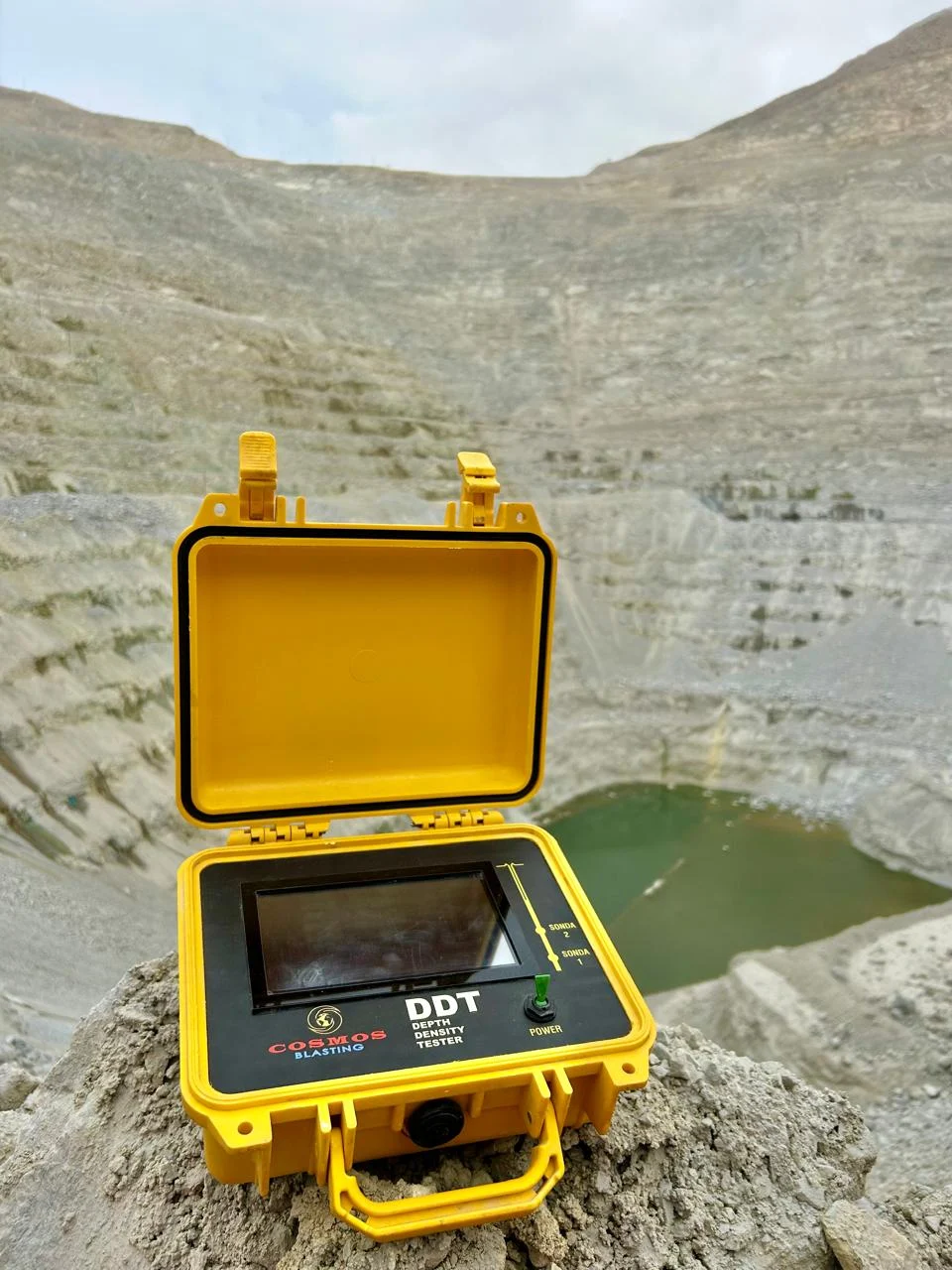
Explosive density and pressure in the hole
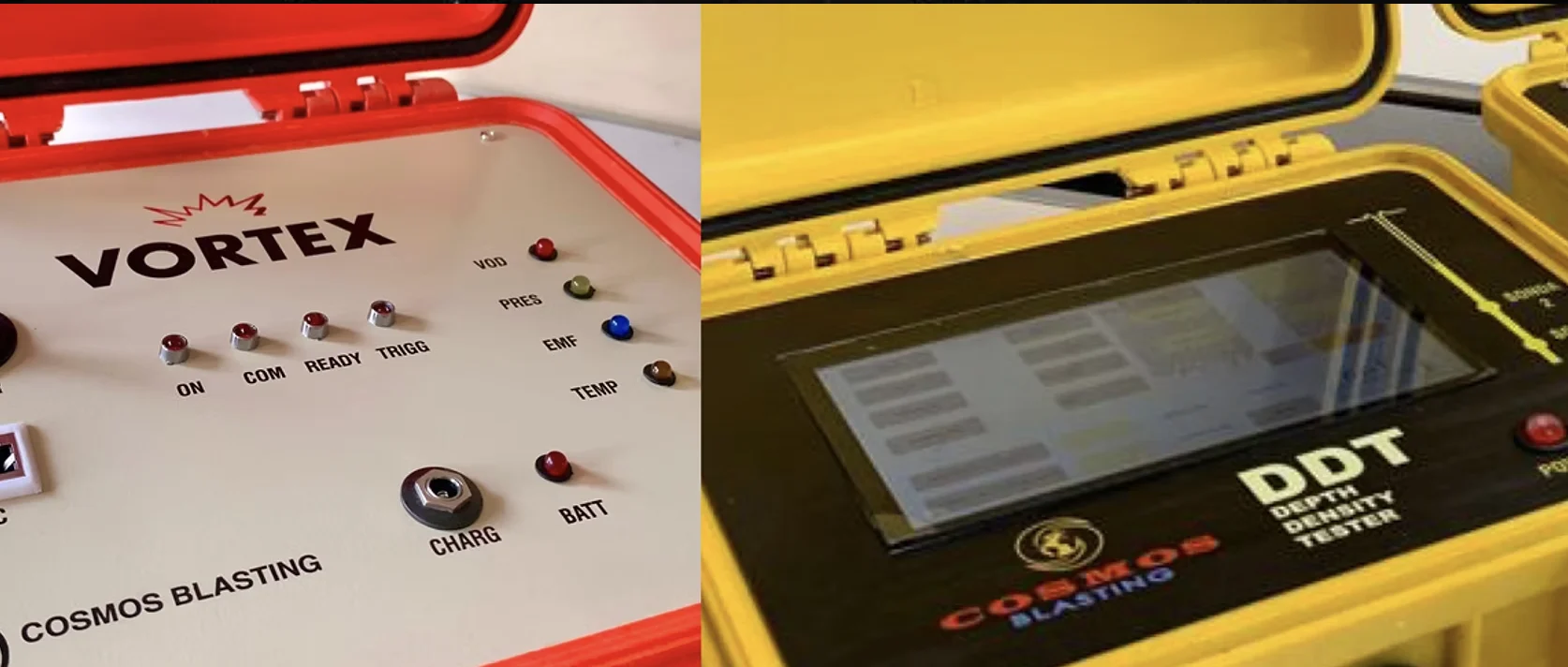
It measures pressure directly and, from the pressure, calculates the density of the explosive at any depth in the hole.
It is used to estimate the sleep time of the explosive and the causes of its breakdown, which is essential for proper detonation, without fumes and with good fragmentation.
Application cases

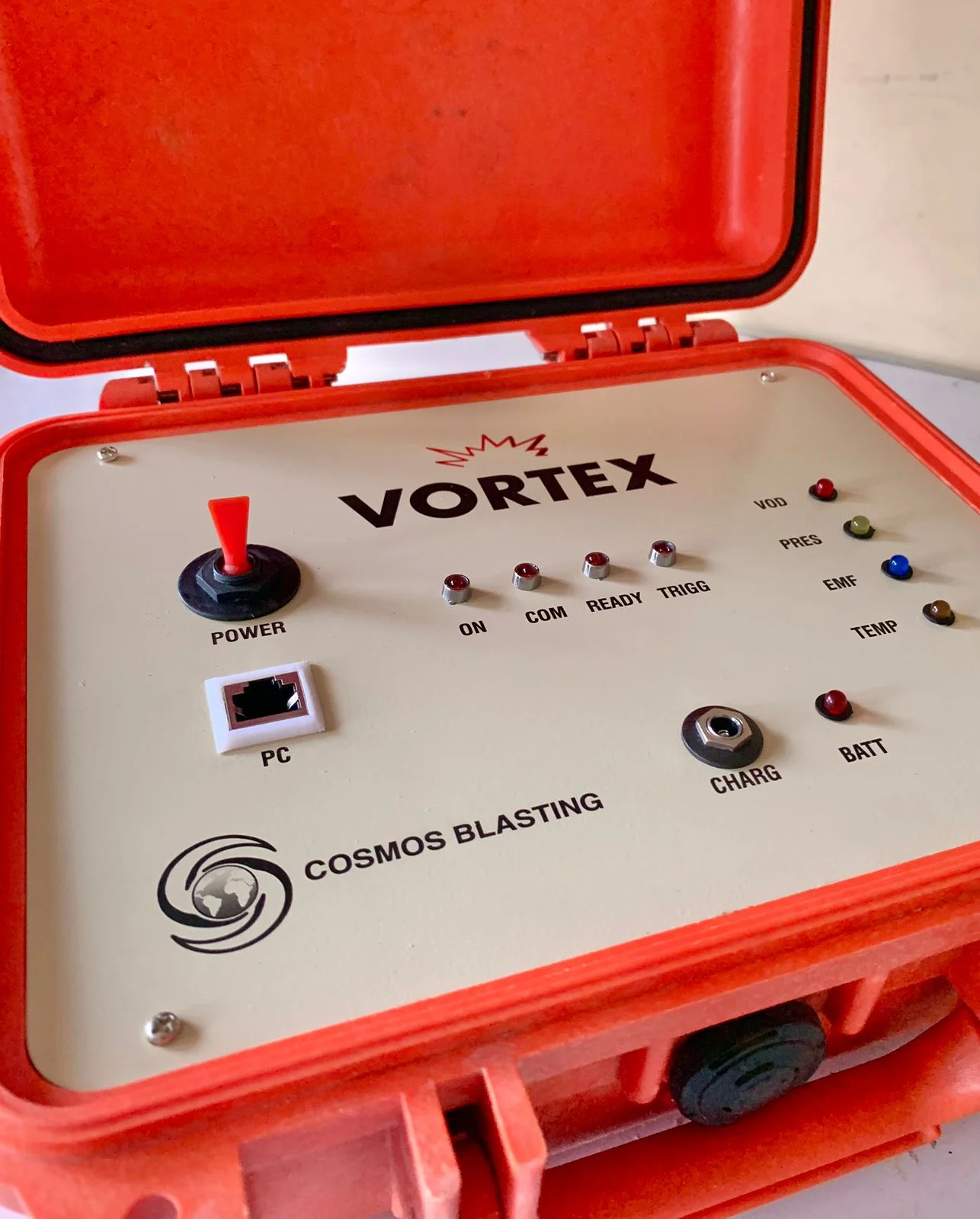
VORTEX
VOD · Pressure · Sequence
It captures data at very high speed, measuring the signals of several sensors directly during the very short time an explosion lasts. It measures VOD, detonation pressure and timing sequence.
Application cases
PULSAR
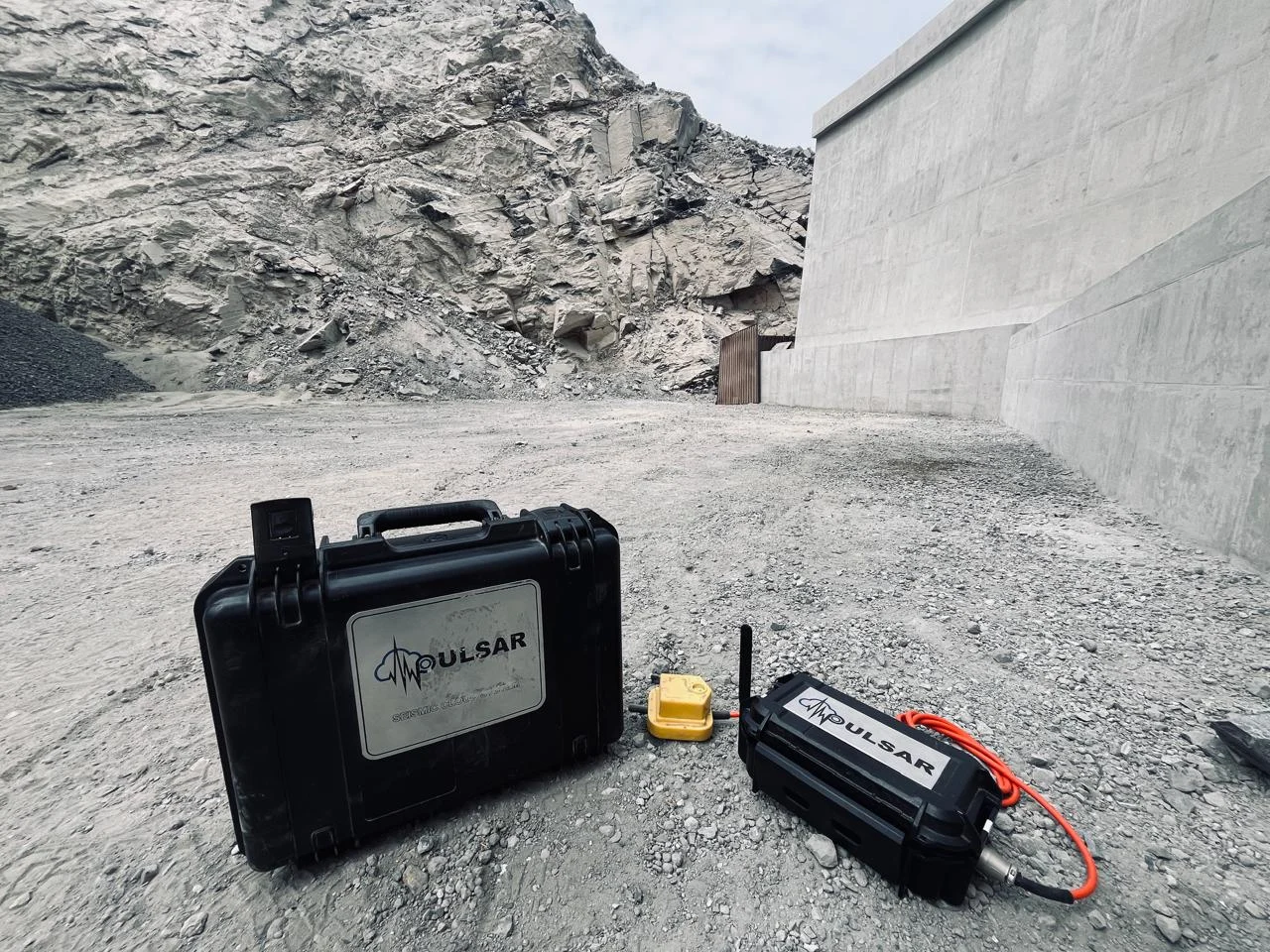
Blasting seismograph
A seismograph dedicated to blast vibration monitoring. It needs no cables and no external computer.
Automatic analysis and reporting on the web.
Geophysical self-calibration tool.
Expandable to 12 channels for seismic studies.